Monday, February 3, 2014

Activities with the Hartts

When we are having company it is always fun to plan places to go and things to do.   Mary and Mike Hartt arranged to come down to Mission for a visit since Mary was running a marathon in Houston, just 350 miles north of here.  The first full day they were here we took off for South Padre Island.  We called in the morning to see if the dolphin tour we booked was still on because it was very foggy.  We were told it would go when the fog lifted.  We got to the island at noon and the sun was out.

 Mike and Mary settled on the boat.  We were taking pictures of each other at the same time.

Not off to a good start!  Wiring to the battery had come loose and needed a bit of MacGiver to get us going.

We scheduled this dolphin tour from a woman who took small groups of 6 or less on her open party boat.  We thought this would be more interesting than a large group boat.

 The area where her boat was parked was a different kind of RV park.  Each lot faced, or backed up to, a canal that lead to the bay.


This pirate ship was docked across from our departure point.   You can take a cruise on the party pirate ship for a tour around the bay.  that could be fun.

We did see lots of dolphins.  Some even swimming right under the front of the boat.  Unfortunately, I was not able to get any usable pictures of the joyful creatures.  I had hoped that on this small tour we would get lots of dolphin background, like their habits, range, families, etc.  Although Scarlet said she had been doing this for 20 years, we got very little information from her.  Maybe we did not ask the right question.

The plan was to take a dolphin tour Monday afternoon, stay overnight there, and Mike and Marlin would do an all day deep sea fishing trip.  Mother Nature had different plans.  As we were returning from the dolphin tour, the fog came in thick and the temperature turned cold and very windy.  The forecast was for more of the same the next day so we had dinner at The Buccaneer and called it a day.

One day we visited "The Old Hidalgo Pump House" which is the location of the steam-driven irrigation pumps that transformed Hidalgo County into a year-round farming phenomenon.  The tour docent, a very enthusiastic woman named Viola, first explained that the Rio Grande Valley is no valley at all.  It is the flood plain for the Rio Grande River, but was labeled as a valley in order to sell land.  It is part of the World Birding Center, because the acreage surrounding the pumphouse is open with grounds and trails that have been intensively landscaped to attract birds and butterflies.

Inside the pumphouse, you can wander all around the huge machinery. The boilers, which were originally wood-fired with mesquite, then converted to oil, then natural gas, then diesel, are still in place. Our guide explain what the machinery was used for, how the water was pumped out of the river and into irrigation ditches that stretched 20 miles north from the river.  This vast irrigation system totally changed the landscape of the valley from thorn scrub forest to rich produce farmland.

 Viola, our tour docent is the retired director of the Pumphouse museum.  Her enthusiasm was boundless and she had the history of the area at her finger tips.  She told the story of the man who saved the facility from being torn down.  He was apparently someone with connections, because when he passed by and saw demolition equipment ready to roll, he asked them to stop, went to higher authorities, and the buildings were saved.  It pays to know the right people!

As you enter the grounds to the pumphouse you cross over the top of these huge gates. They once controlled the flow of water into the irrigation system. The pumphouse once sat on the Rio Grande, but a flood in 1933 changed the course of the river, which is now a half-mile away. A channel was dug from the pumphouse to the river, to bring river water to the huge intake pipes.


 Good signage throughout the museum explaining how the process worked.

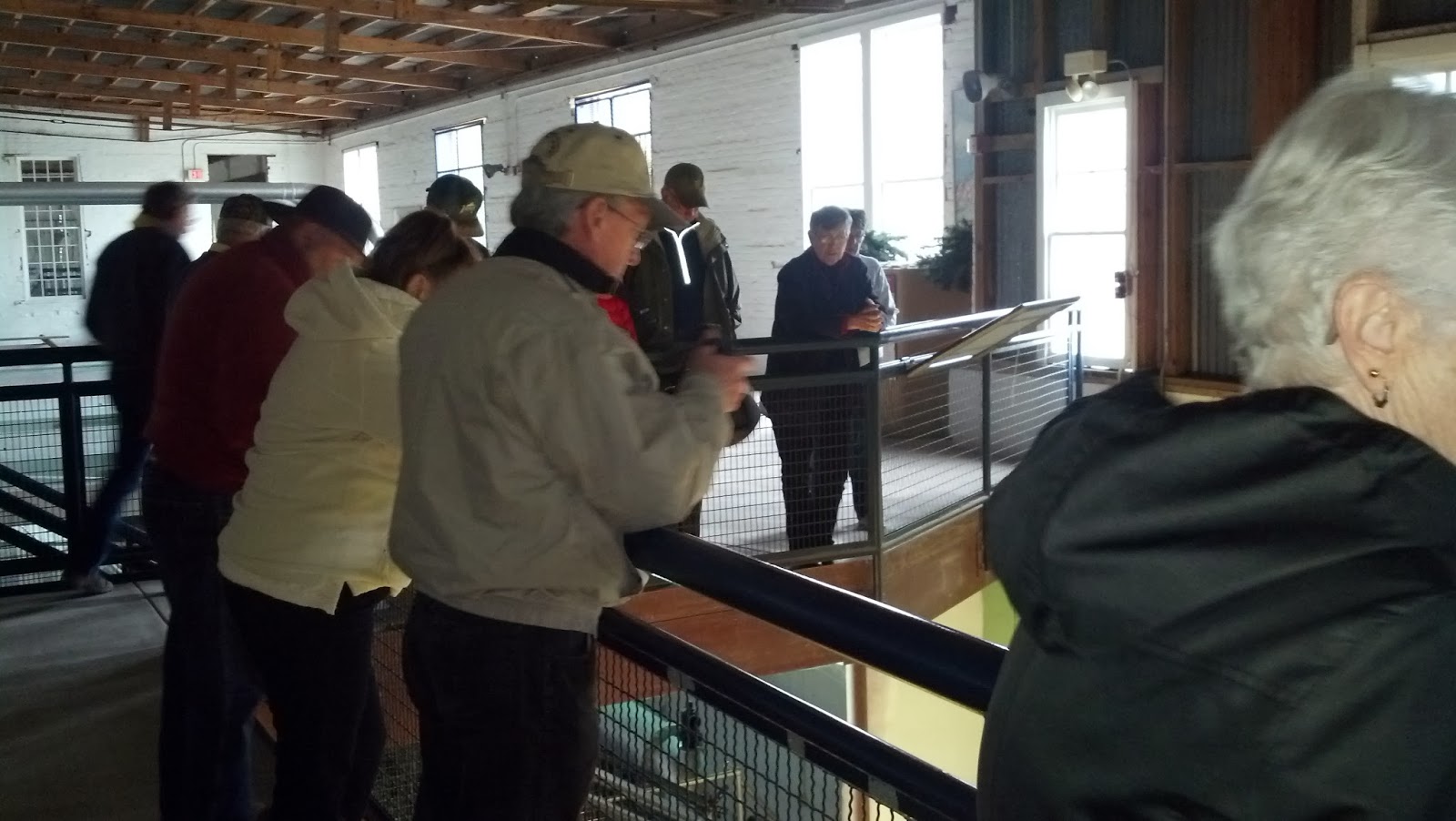
 Avid listeners checking out the workings during Violas talk


 Remaining equipment and engines

 The remaining smoke stack.  Originally there were two.


The canal that was dug from the river after the hurricane.


Good for today.  More travels tomorrow, stay tuned.

Sunday, February 2, 2014

Quinta Mazatlan

Whoa! It has been over two weeks since my last post.  Got behind and then Mary and Mike Hartt visited with us for a week, so I have not had much computer time.  I downloaded pictures of Quinta Mazatlan from the first time we visited there, but never finished the post or got it published.  Since then we returned to this magnificent setting with the Hartts, so I have more pictures to add to my original set.

Quinta Mazatlan was built in 1935 by Jason Chilton Matthews, a writer and world traveler, who is reported to have served with Lawrence of Arabia in Lebanon's war of Independence from the Turks.  He and his wife lived in the house for 30 years.

The second owners were Frank and Marilyn Schultz, who purchased the estate in 1968, and lived there until 1998, when Quinta Mazatlan was put up for auction.  At that time Mission was growing rapidly and with the location near the airport, developers wanted to demolish the house and sell the land for business.  The City of Mission had the foresight to purchase this unique property, and after renovations, open it to the public as one of the nine World Birding Centers.

Since that purchase, the city has expanded the grounds and reestablished native habitat, as well as adding an extensive collection of sculptures.


Entrance gate and walkway to the house


This was the first sculpture we came to at the head of the entrance walkway.  It is two adult and two baby chick Chachalaca's.  These birds are common here in the tip of Texas but are not seen much further north.

This is the front of the house.  The first day we visited, it was a Monday and the buildings were closed, but we walked around the grounds for several hours.

An aerial view of the house and grounds.  The name Quinta Mazatlan in Spanish is translated to mean house, or estate, of the land of the deer.


A rear patio
Pools at the rear patio
One entrance to the sculpture gardens
A few of the animal sculptures scattered throughout the gardens


Javalinas


My favorite of the many water features scattered throughout the park.

 Estate entrance

On our visit with Mary and Mike we went for the 8:30  bird walk.  Since it was a cold windy day, we were the only takers.  Our guide John Bush gave us a great tour even though we saw a limited number of birds.

After the bird walk we were free to walk through the first floor of the house.  It was quite impressive.

 This was the dining room

 One of the sitting rooms


 Roman style bath reportedly built by Jason Mathews himself.


Outside base of one of the fireplace chimneys

For more information about Quinta Mazatlan take a look at www.quintamazatlan.com. It has become my favorite WBC (so far)

During the week that Mike and Mary were here we enjoyed some fun activities.  Stay tuned for the next episode, hopefully tomorrow.

Saturday, January 18, 2014

Roma Bluffs


The city of Roma is about an hour west of Bentsen so we set out early, with a breakfast stop at Margarita's to sample Texas' version of Huevos Rancheros.  We love the food here, but today our vote was for James, who makes this Mexican egg concoction  for us at home.  The waiter was not busy so we chatted quite a bit with him and he offered to take our picture.


Then we took his picture!  The restaurant is run by a family.  Mom cooks, the three kids we have met wait tables, and all are super friendly.  They will fix your food any way you want to order it.  Sometimes the translation is not perfect.


Roma sits high above the Rio Grande River on the US side and the World Birding Center maintains an open deck that provides great views East, West, and South across to Mexico. 


 The river narrows here and looks like an easy trip from one side to the other.  Nothing interesting while we were here but our co hosts visited a few days ago and witnessed a raft of immigrants paddling across, in broad daylight, in full view of several Border Patrol officers sharing the viewing deck with them.  The officers told our neighbors there were Border Patrol at the landing and this event was not unusual.  Desperate people do desperate things.

 The Roma-Ciudad Miguel Aleman bridge, built in 1979 now provides access to and from Mexico. Looking to the far side of this newer bridge you can see the towers of the previous crossing.  This older Roma International suspension bridge, built in 1927, has been renovated and is planned to be open for foot traffic sometime in the future.  Made me think of the old Bucksport suspension bridge that is gone forever.


Of the nine World Birding Centers that are located along 120 miles of the Rio Grande river, Roma Bluffs is the furthest west.  The WBC Visitors center there is located in the Roma Historic District. It is owned by the city but operated by the US Fish and Wildlife Service. This small facility is housed in one of the historic buildings and includes several small gardens and patios.  The day we visited, the docent explained the reason there were no birds in any of the gardens.  Apparently a hawk had been spending the last two days perched in a tree over looking the center waiting for an easy meal.


 Roma was designated a National Historic Landmark district in 1993.  A nine square-block area  traces its roots back to the Spanish Colonial colonists in the 1760's. More than 30 buildings in this area were constructed in the 1880's 

This tower was part of the original Nuestra Senora del Refugio church built in 1853

The Manuel Guerra residence and store was built by Enrique Portscheller in 1884  This was one of Roma's leading merchants in that era.  When this building was restored in the 1990's, exhaustive research was conducted in order to match the original exterior colors.  Unfortunately, it looks like it has not been maintained since then.

The Parish Hall, built in the 1880's, originally housed the convent of the Sisters of the Incarnate Word, and later, the Sisters of Mercy  It was also built by Enrique Portscheller, an Austrian mason who constructed many of these historic buildings.

Roma has a long proud history, hope they can keep it going.


Saturday night dinner with our co-hosts Fred & Charlotte and Peggy.