Monday, February 15, 2016

Wakulla Springs State Park

Another interesting spot that we visited in the Sopchoppy area is Wakulla Springs State Park, a 6000 acre wildlife sanctuary.  The springs, from which the park takes its name, puts out 400,000 gallons of water per minute


We arrived just in time to take the 12:00 boat tour down the Wakulla River.

There were about 15 or 20 people waiting for the tour today.  From the number of boats at the dock, it looks like there are much bigger crowds at other times of the year.  We keep forgetting this is winter here in Florida.


Captain Bob lays out the coast guard boating rules with a light chuckle, since most of the river is shallow enough to wade into shore


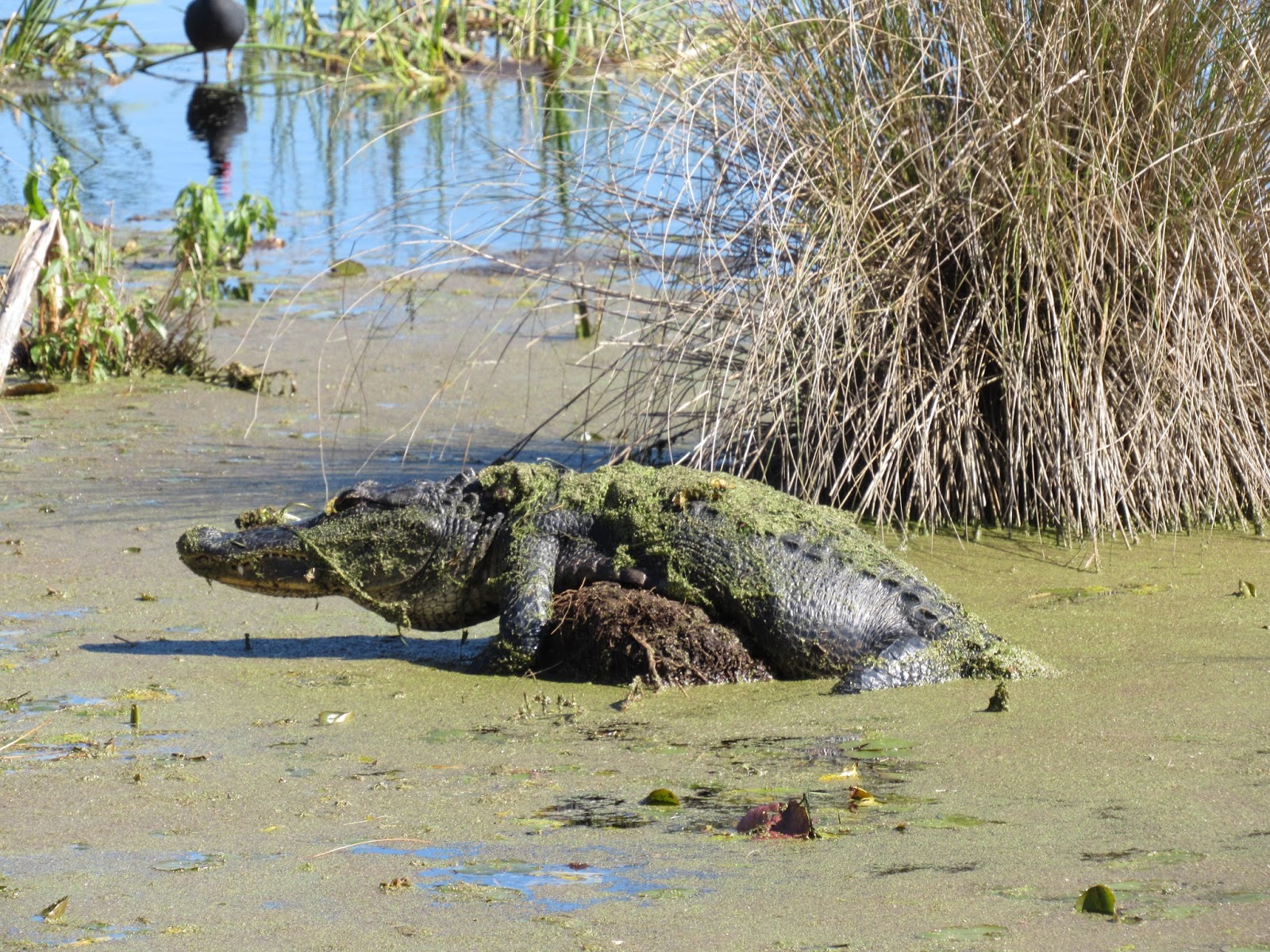
a few crocks


Lots of turtles.


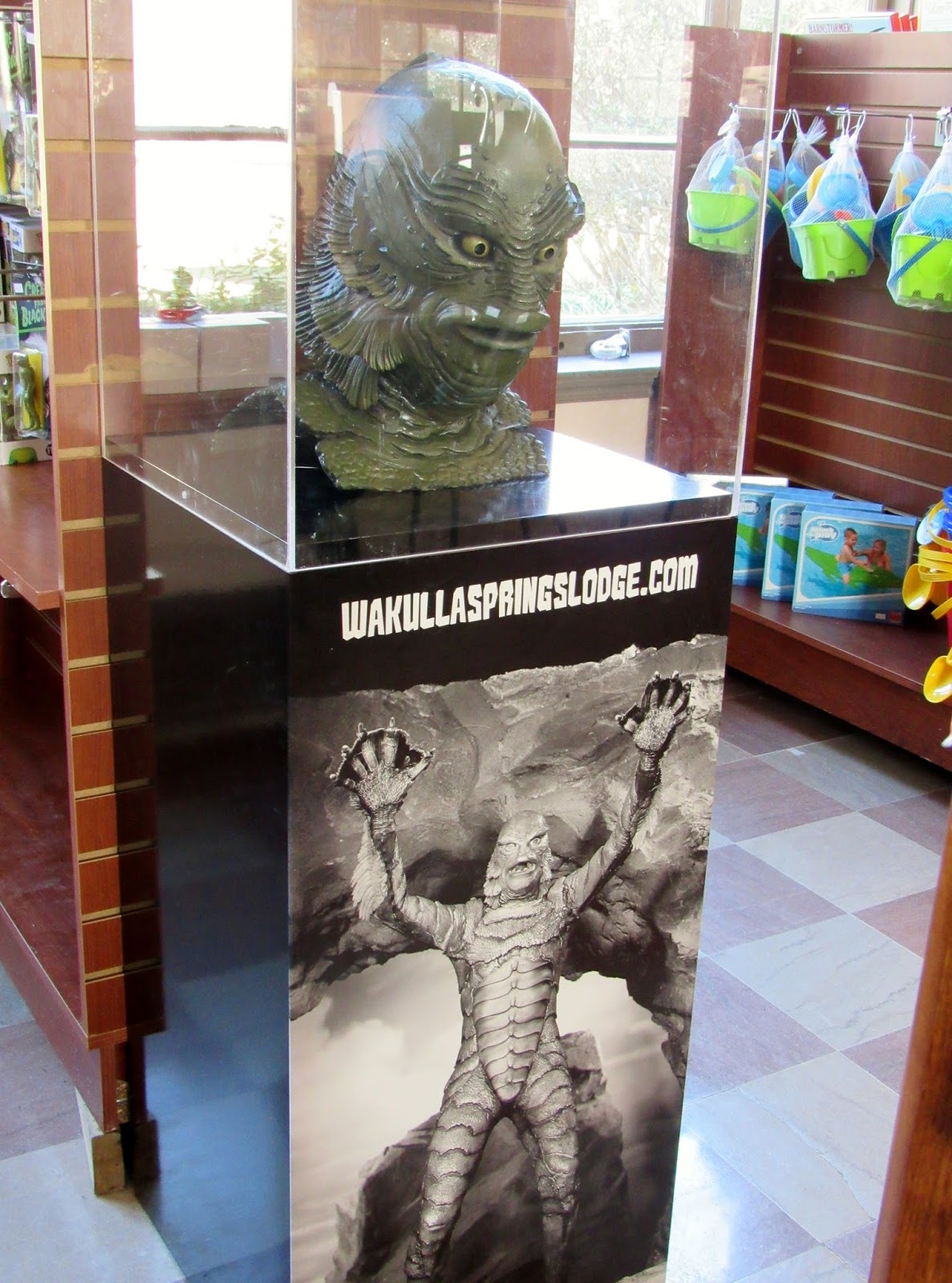
Wakulla springs has been the site of several Tarzan movies as well as the 1950's  Creature From the Black Lagoon.  Our Captain took the boat into the small backwater where the "Creature" lived!


Makes me want to rent that old classic and watch it again.


For the final leg of the journey Captain Bob took the boat into the area where the spring bubbles up for underground.  There were several manatees there enjoying the warm 75 degree water.


Diving platform


We were not dressed for swimming


Two manatees stayed around after the boat left and we could see them quite well from the tower.

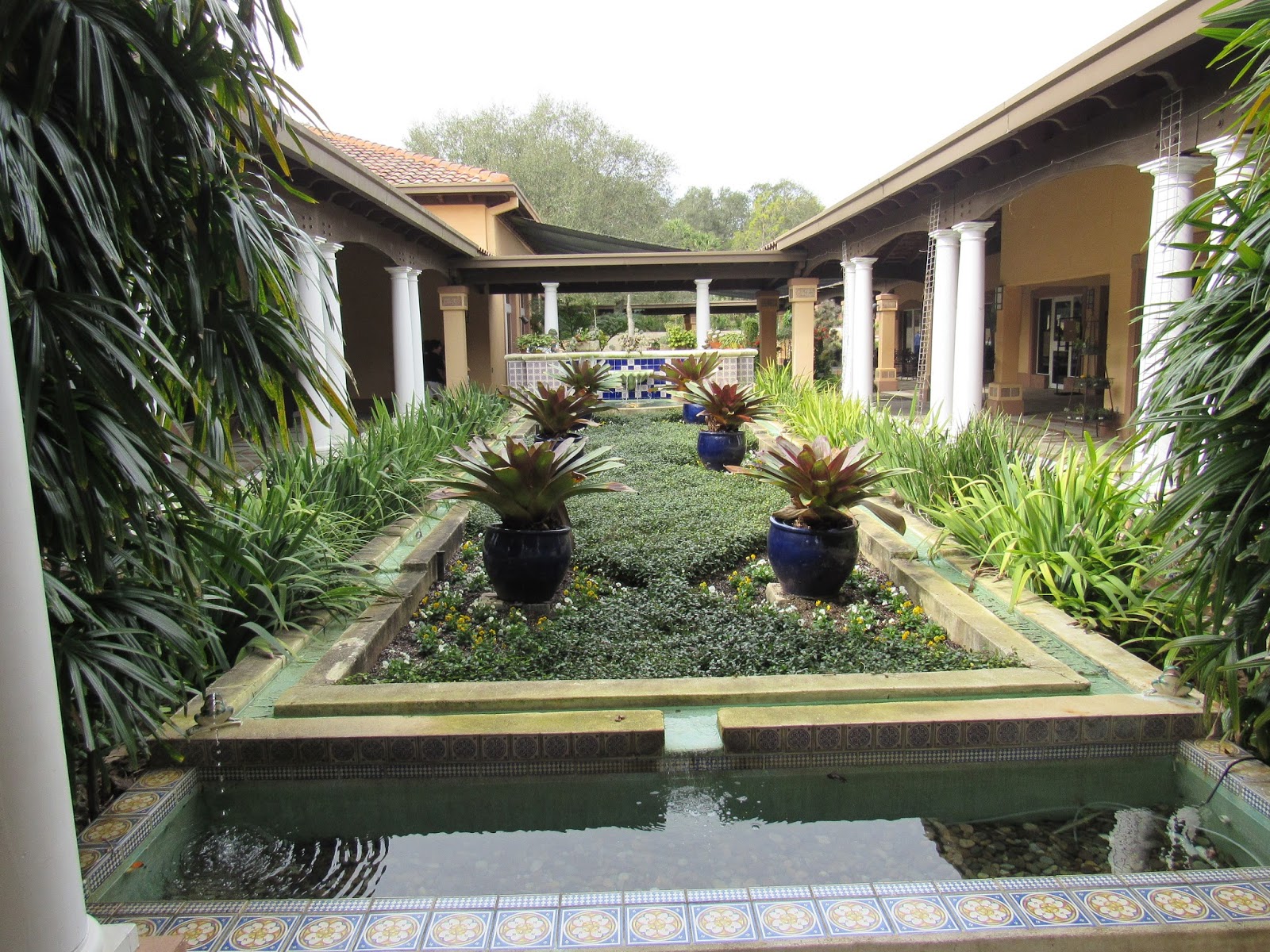
Wakulla State Park also has a hotel on the grounds.  This State Park was once part of the Edward Ball estate.  Mr. Ball purchased the 4000 acres surrounding the spring, back in 1937 and built Wakulla Springs lodge as a guest house for his friends. It sounds like no expense was spared when it was constructed with imported marble and tile.  He hired the best metal, tile, mason, and stone cutter craftsmen, as well as  painters and artists.  He even ran a telephone line over 80 miles from Port St. Joe, to the spring.  Edward ball was the financial manager for the DuPont family. He donated the guest house and land to the State of Florida in 1968.


Hotel lobby

Beautiful painted ceilings


Marble tiled porches leading outside to the grounds


Tile work surrounding entry doors.


At one time there was an active post office here. 


This original counter is all marble

Posters for the movie Creature of the Black Lagoon are available in the gift shop.


We did not get to see any of the rooms in the hotel but each of the 27 rooms have large marble bathrooms, walk in closets, and period furnishings.  It would be fun to spend a night here pretending you were a guest of Edward Ball and his sister Jessie Ball DuPont.

Wednesday, February 10, 2016

Florida Panhandle

After leaving Arcadia, Florida, we spent another 5 days at Withlacoochee State Forest.  We really enjoy the close proximity to the 46 mile rails to trails bike path.


 Marlin is enjoying his new bike even more now that we got a gel seat to replace the racing seat that was originally on the bike.  We biked to the village of Floral City, about 7 miles north of our campground, on a beautiful sunny day.  There is a great little museum there with exhibits on local history as well as information about past Native American tribes and Spanish explorers who  inhabited the surrounding areas.  The Library, next door, had a book sale the following day, so a return trip to Floral City took place the next day, by truck this time.

Floral City is known for the mature Live Oaks that line the two main streets and create a continuous tunnel through town.  When any of the trees die they are immediately replaced so the tunnel will always continue to be part of the town heritage.

The road to downtown Floral City

http://www.floralcityfla.com/images/stories/historichomes/09MG_0002-The-road-to-Flora.jpg


We had a couple of  days of heavy rain while we were in this area, which allowed some down time.  However, one of the rainy nights we took a Ghost tour at the May Stringer house, in Brooksville.


May-Stringer House01.jpg

The current fame of the house, in addition to the careful restoration of the building, is the repeated reports of ghost encounters and aura sightings.

In 1855 John May built a 4 room house on 160 acres of Homesteaded land. This home proved to be unlucky for the May family.  John died in 1857, his wife eventually remarried Frank Saxon, but did not survive the birth of her daughter, and the child, Jessie May, only lived until she was four years old.  Jessie May and her father are among the several ghosts that continue to inhabit the house.
 The next owner, Dr Samual Stringer, expanded the house to 14 rooms and operated his medical practice on the ground floor.  It became a museum in 1981.  Now you can come and see (maybe) the ghosts for yourself.

Our down-to-earth tour docent gave a normal museum tour, moving from room to room in the mansion, and sharing the details of which ghost resided in each of the different rooms.  She elaborated on a few of her own experiences  and shared a notebook of pictures taken of the unusual lights, orbs, and bodily images, taken on the site.  It was a fun way to spend a rainy night and Mary even saw a brief glowing light from under a child's bed while wandering around after the end of the tour.  Is she more of a believer now?


Moving North through the Florida Panhandle brought us to Sopchoppy, a small village, 30 or so, miles south of Tallahassee. 
The nearest State Park, Oahclocknee River SP had no openings, but they recommended the Sopchoppy City Park.  This tiny park has about 20 full service sites located right on the edge of the Sopchoppy River.  Not too fancy, but not crowded either.  There was a short hiking path that followed the river and looped back to the campground that made a leisurely trip just before dusk.


Just up the road Mary spotted an unusual art display.  What do you think?


You will probably see some pictures of this "art exhibit" in the future if you check out Mary's photos at Dysarts.


St Marks National Wildlife Refuge encompasses an impressive 70,000 acres, which includes 43 miles of Gulf coast line.


St. Marks has been part of the Whooping Crane partnership since 2009.  This Partnership was initiated to reestablish a migratory population of the endangered whooping cranes in Florida.  You may have seen the films of the ultra-lite aircraft leading young cranes from their summer breeding ground in Wisconsin down to Florida.  The idea is that the young birds will mature here, return to Wisconsin in spring as adults, then back to Florida the next winter.  Unfortunately, the visitor center docent said the grant is expiring next year and the program is in danger of ending.  These birds are still endangered.  There are less that 500 whooping cranes in the wild.


 These birds can be up to 4 1/2 feet tall, with a wing span of 7 feet or more.  They are quite a sight to see, either standing or flying.  They make the sand hill cranes look small.  The Florida whooping cranes are not in areas where they can usually be viewed so we had to make due with the visitors center exhibit.


On display in the visitors center is the original Fresnel lens from the St Marks Lighthouse.  It was installed in 1867 and removed in 2014 for preservation.


Mike and Mary on the deck at the Visitors Center, along with the friendly docent.


View over the deck


Lots of opportunities for bird and wildlife viewing along the main road to the lighthouse.
 

This guy looks a bit awkward perched on an uncomfortable looking rock.  Guess they will find anything to be able to soak up the sun.


St. Mark's lighthouse, built in 1842.  With walls that are 4 feet thick at the base and taper to 18 inches at the top of the 72 step staircase.
  

On to Wakilla State Park tomorrow

Wednesday, February 3, 2016

Boc Tower, Lake Whales, FL

Our next adventure began when we moved north from Naples to Arcadia, Florida.  The Burwells were still in Arcadia and we wanted to help Julie celebrate her birthday.  Which we did.


Julie's Birthday request:  Angel food cake with strawberries and whipped cream, no candles. (She doesn't like the wax!)

  The day after her celebration, we went to see the famous Boc Tower Gardens in Lake Whales, FL.


The 205 foot "singing" tower rises above the tree line long before you reach the parking lot.


The Garden motto, "make the world a bit better or more beautiful because you have lived in it", is taken from Edward Boc's grandmother's advice to him.

This amazing "carillon" tower was the inspiration of Edward W. Boc, former editor of The Ladies Home Journal.  In following his Grandmother's advise, he purchased the land on Iron Mountain, in Lake Wales, Florida, with the idea of creating a bird sanctuary.  Iron Mountain, which at 298 feet  above sea level, is the highest elevation in the entire State.  Boc began by commissioning the famous landscape architect, Frederick Law Olmsted Jr., and instructed him to turn the sand hill into a place of beauty.


Olmsted began by trucking in thousands of loads of rich black soil in which to plant lush sub-tropical plants


The established gardens are home to over 126 different species of birds and mammals. 

The Tower Reflecting Pool was created to entice birds and animals to take up residence in the garden.  It also offers a striking first view of the tower.


Boc Tower, designed by Milton B. Medary, architect, sculpted by stone sculptor Lew Lawrie, and the colored tiles at the top, designed by J.H. Dulles Allen.


The Eagles at the very top were carved in place.

The enormous brass doors were carved by master metalworker Samuel Yellin.  They depict scenes from the Bible's book of Genesis.  More information about the creators of this great tower can be found on www.boctowergardens.org.


  Brass doors


Ceramic tile  panels cover the bell tower and allow the music to be heard in the entire garden.


Other sculptures on the tower depict nature scenes.


This magnificent tower was specifically built to house a "Carillon", which was an entirely new concept for me.  Popular in Europe, a true carillon must have at least 23 cast bronz bells.  The  bells that create the songs, do not move.  The bells are stationary and the clappers are moved by wires attached to a keyboard.    The Boc tower carillon, with 60 bells, weighing a total of 62 tons, is considered the largest in the United States.  The Carillon in New York City has more bells, but the total weight is less than the bells here in Florida.  Guess weight out guns numbers!

The original keyboard for the Boc Tower carillon.  The large bells are played with the foot because of their weight.


Wires run from the keyboard's soundproof room, up to the bell tower.


The largest bell  weighs 12 tons.  The visitors center has a cut-out of the largest bell and lets you compare your size to the bell's size.


 The bell rings each hour with a song and twice each day a full concert is performed by the Carrillonneur.  The current resident Carrillonneur is Geert D'hollander.  Near the tower there is a closed circuit TV that allows visitors to view Geert as he performs the music.  The website listed above also list information about Mr. D'hollander, who is only the 4th Carrillonneur at this tower.


Geert D'hollander the resident Carillonneur


More of the grounds  


The gardens have both paved and unpaved walking trails


In the Reflecting pool


The Burwells enjoying the music and grounds


At "Window on a Pond" there is a bird blind looking out on several bird feeders.  Watching a squirrel check out his options, and thinking he could not get to the seed in the water, lasted about 3 minutes.  He took a flying leap and landed right where he wanted to be.


There is much information about the construction of the tower, the gardens,  the carillon, and the Carrillonneur on the web site that is worth taking a look at.  Boc Tower Garden is highly recommended if you are in central Florida.